
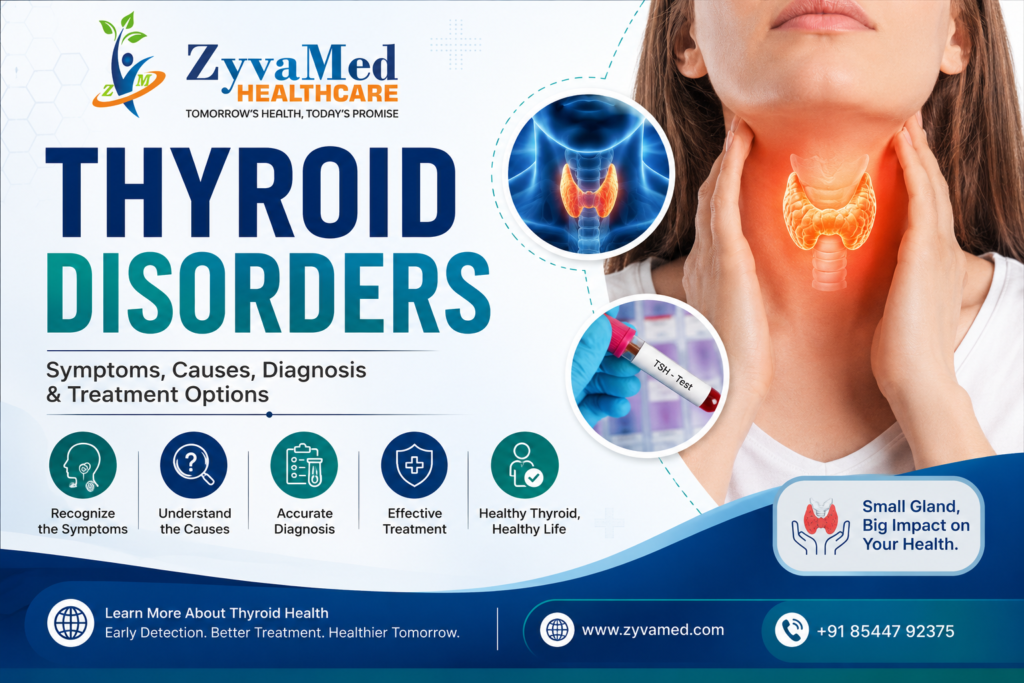
Thyroid Disorders Explained: Symptoms, Causes, Diagnosis & Treatment Options
Introduction
The thyroid gland is a small butterfly-shaped gland located at the front of the neck. Although small in size, it plays a vital role in regulating metabolism, energy production, body temperature, heart rate, and overall growth and development.
When the thyroid gland produces too much or too little hormone, it can lead to thyroid disorders. These conditions affect millions of people worldwide and are more common in women than men. Unfortunately, thyroid disorders often go undiagnosed because their symptoms can resemble those of other health conditions.
Understanding thyroid disorders, their symptoms, causes, diagnosis, and treatment options can help individuals seek timely medical care and maintain better health.
What Are Thyroid Disorders?
Thyroid disorders occur when the thyroid gland does not function properly. The thyroid produces two important hormones:
- Triiodothyronine (T3)
- Thyroxine (T4)
These hormones regulate how the body uses energy.
The most common thyroid disorders include:
Hypothyroidism
A condition where the thyroid gland produces insufficient thyroid hormones.
Hyperthyroidism
A condition where the thyroid gland produces excessive thyroid hormones.
Goiter
An enlargement of the thyroid gland.
Thyroid Nodules
Abnormal lumps that develop within the thyroid gland.
Thyroiditis
Inflammation of the thyroid gland.
Types of Thyroid Disorders
1. Hypothyroidism
Hypothyroidism is the most common thyroid disorder. It occurs when the thyroid gland is underactive and cannot produce enough hormones.
Common causes include:
- Hashimoto’s thyroiditis
- Iodine deficiency
- Thyroid surgery
- Certain medications
- Radiation therapy
2. Hyperthyroidism
Hyperthyroidism occurs when the thyroid gland becomes overactive and releases excess hormones.
Common causes include:
- Graves’ disease
- Thyroid nodules
- Excess iodine intake
- Thyroid inflammation
3. Goiter
A goiter refers to abnormal enlargement of the thyroid gland and may occur with both hypo- and hyperthyroidism.
4. Thyroid Nodules
These are solid or fluid-filled lumps within the thyroid gland. Most are non-cancerous, but some require medical evaluation.
Symptoms of Thyroid Disorders
Symptoms vary depending on whether the thyroid is underactive or overactive.
Symptoms of Hypothyroidism
- Fatigue and low energy
- Weight gain
- Dry skin
- Hair thinning or hair loss
- Constipation
- Depression
- Memory problems
- Sensitivity to cold
- Puffy face
- Slow heart rate
Symptoms of Hyperthyroidism
- Unexplained weight loss
- Rapid heartbeat
- Anxiety and nervousness
- Excessive sweating
- Tremors
- Difficulty sleeping
- Increased appetite
- Heat intolerance
- Muscle weakness
- Frequent bowel movements
Causes of Thyroid Disorders
Several factors can contribute to thyroid dysfunction.
Autoimmune Diseases
Autoimmune conditions are among the leading causes of thyroid disorders.
Examples include:
- Hashimoto’s Thyroiditis
- Graves’ Disease
Iodine Deficiency
Iodine is essential for thyroid hormone production. Insufficient iodine intake can lead to thyroid enlargement and hypothyroidism.
Genetic Factors
Family history can increase the risk of developing thyroid disorders.
Pregnancy
Hormonal changes during pregnancy can affect thyroid function.
Stress
Chronic stress may indirectly impact thyroid hormone balance.
Certain Medications
Some medications can interfere with normal thyroid function.
Risk Factors
You may be at increased risk if you:
- Are female
- Are over 60 years of age
- Have a family history of thyroid disease
- Have autoimmune disorders
- Are pregnant or recently gave birth
- Have undergone thyroid surgery
How Are Thyroid Disorders Diagnosed?
Doctors use various tests to diagnose thyroid conditions.
Physical Examination
The doctor checks for swelling, enlargement, or nodules in the neck.
Blood Tests
The most common tests include:
- TSH (Thyroid Stimulating Hormone)
- T3
- T4
Abnormal levels help determine thyroid function.
Thyroid Ultrasound
Used to evaluate thyroid nodules or enlargement.
Thyroid Scan
Provides detailed information about thyroid activity.
Antibody Testing
Helps diagnose autoimmune thyroid diseases.
Treatment Options for Thyroid Disorders
Treatment depends on the specific condition and its severity.
Treatment for Hypothyroidism
Most patients require lifelong thyroid hormone replacement therapy.
Medication helps:
- Normalize hormone levels
- Improve energy
- Restore metabolism
- Reduce symptoms
Treatment for Hyperthyroidism
Treatment options may include:
- Anti-thyroid medications
- Radioactive iodine therapy
- Beta-blockers
- Surgery in severe cases
Treatment for Thyroid Nodules
Management depends on size, symptoms, and whether cancer is suspected.
Best Diet for Thyroid Health
A balanced diet supports healthy thyroid function.
Foods That Support Thyroid Health
- Iodized salt
- Fish
- Eggs
- Dairy products
- Nuts and seeds
- Whole grains
- Fresh fruits
- Green vegetables
Selenium-Rich Foods
Selenium helps support thyroid hormone metabolism.
Sources include:
- Brazil nuts
- Tuna
- Sunflower seeds
- Eggs
Zinc-Rich Foods
Zinc contributes to thyroid hormone production.
Sources include:
- Pumpkin seeds
- Chickpeas
- Meat
- Dairy
Lifestyle Tips for Managing Thyroid Disorders
Exercise Regularly
Physical activity helps regulate metabolism and maintain a healthy weight.
Manage Stress
Yoga, meditation, and relaxation techniques can improve overall well-being.
Take Medication Consistently
Always follow your doctor’s instructions.
Regular Check-Ups
Routine thyroid function tests help monitor treatment effectiveness.
Can Thyroid Disorders Be Prevented?
Not all thyroid disorders can be prevented, especially those caused by genetics or autoimmune diseases. However, maintaining a healthy lifestyle and consuming adequate iodine can reduce certain risks.
Prevention tips include:
- Eat a balanced diet
- Use iodized salt
- Exercise regularly
- Manage stress
- Attend regular health screenings
Conclusion
Thyroid disorders are common but manageable conditions that can significantly affect quality of life if left untreated. Early diagnosis, proper medical treatment, healthy eating habits, and regular monitoring can help individuals maintain normal thyroid function and lead healthy, active lives.
If you experience persistent fatigue, unexplained weight changes, mood disturbances, or other thyroid-related symptoms, consult a healthcare professional for proper evaluation and treatment.
Frequently Asked Questions (FAQs)
1. What are the early warning signs of thyroid problems?
Common early signs include fatigue, unexplained weight changes, hair loss, mood changes, and sensitivity to temperature.
2. What causes thyroid disorders?
Thyroid disorders may result from autoimmune diseases, iodine deficiency, genetics, medications, or hormonal changes.
3. Can thyroid disorders be cured?
Some thyroid conditions can be effectively managed with medication and treatment, although certain disorders may require lifelong monitoring.
4. Is thyroid disease more common in women?
Yes. Women are significantly more likely than men to develop thyroid disorders.
5. Can thyroid problems cause weight gain?
Yes. Hypothyroidism often slows metabolism, leading to weight gain.
6. Can thyroid disorders cause hair loss?
Yes. Both hypothyroidism and hyperthyroidism can contribute to hair thinning and hair loss.
7. Which foods are good for thyroid health?
Fish, eggs, dairy products, nuts, seeds, fruits, vegetables, and iodized salt support thyroid health.
8. How is hypothyroidism treated?
Hypothyroidism is usually treated with thyroid hormone replacement medication.
9. Can stress affect the thyroid?
Chronic stress may influence hormone balance and potentially worsen thyroid symptoms.
10. How often should thyroid levels be checked?
The frequency depends on individual health conditions and treatment plans, but regular monitoring is recommended by healthcare professionals.
11. What is the difference between hypothyroidism and hyperthyroidism?
Hypothyroidism occurs when the thyroid produces too little hormone, while hyperthyroidism occurs when it produces too much.
12. Can thyroid disorders affect pregnancy?
Yes. Proper thyroid function is important during pregnancy for both maternal and fetal health.