
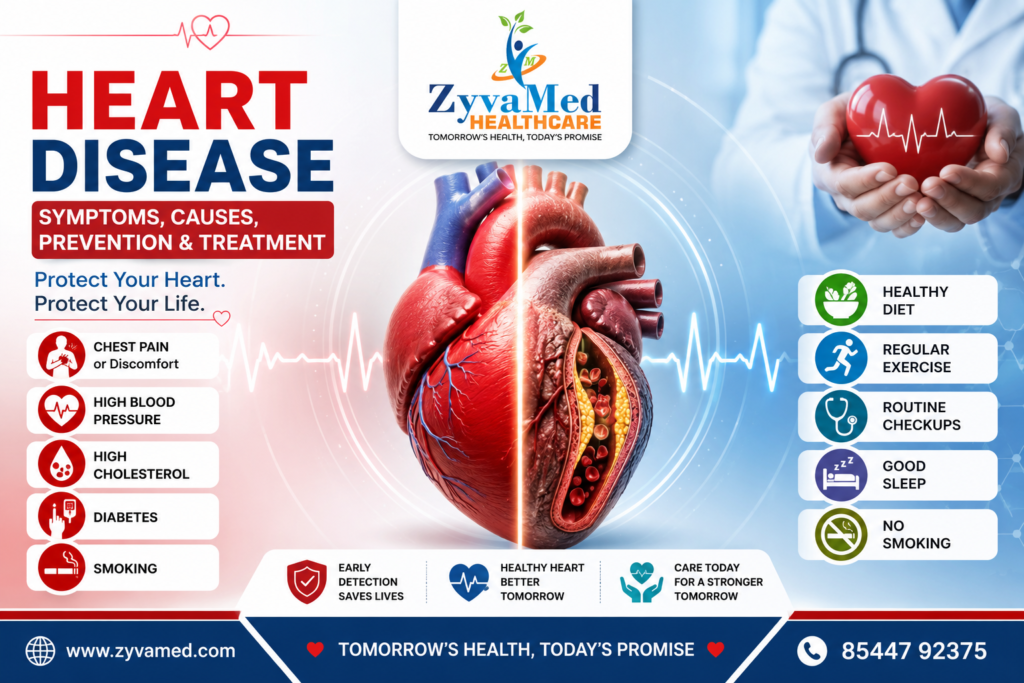
Heart Disease: Causes, Symptoms, Risk Factors, Prevention & Treatment
The heart is one of the most important organs in the human body. It works continuously to pump blood, oxygen, and nutrients to every organ and tissue. However, due to modern lifestyle habits, heart disease has become one of the leading causes of death worldwide.
According to health experts, millions of people suffer from heart-related conditions every year, and many cases could be prevented through early diagnosis and healthier lifestyle choices.
In this comprehensive guide, we will explore everything you need to know about heart disease, including its causes, symptoms, types, diagnosis, treatment options, prevention strategies, and practical heart-health tips.
What Is Heart Disease?
Heart disease refers to a group of conditions that affect the heart’s structure and function. These conditions can impact the heart muscles, valves, blood vessels, or electrical system.
Heart disease may develop gradually over several years and often remains unnoticed until symptoms become severe.
Types of Heart Disease
1. Coronary Artery Disease (CAD)
This is the most common form of heart disease.
It occurs when fatty deposits (plaque) build up inside the arteries supplying blood to the heart.
This reduces blood flow and increases the risk of heart attack.
2. Heart Attack (Myocardial Infarction)
A heart attack occurs when blood flow to a part of the heart becomes blocked.
Without adequate oxygen, heart muscle tissue begins to die.
3. Heart Failure
Heart failure does not mean the heart has stopped working.
It means the heart cannot pump blood efficiently to meet the body’s needs.
4. Arrhythmias
Arrhythmias are abnormal heart rhythms.
The heart may beat:
- Too fast
- Too slow
- Irregularly
5. Valvular Heart Disease
Heart valves regulate blood flow through the heart.
Damage to these valves can interfere with normal circulation.
6. Congenital Heart Disease
These are heart defects present at birth and may affect heart structure or blood flow.
What Causes Heart Disease?
Several factors contribute to heart disease development.
High Blood Pressure
High blood pressure forces the heart to work harder and can damage blood vessels over time.
High Cholesterol
Excess cholesterol can accumulate in arteries and restrict blood flow.
Diabetes
High blood sugar damages blood vessels and increases cardiovascular risk.
Obesity
Being overweight places additional strain on the heart and increases the risk of hypertension and diabetes.
Smoking
Smoking damages blood vessels and significantly increases the risk of heart attacks and strokes.
Physical Inactivity
A sedentary lifestyle weakens cardiovascular health and promotes weight gain.
Chronic Stress
Long-term stress can contribute to high blood pressure and unhealthy habits.
Excessive Alcohol Consumption
Heavy drinking can lead to heart rhythm abnormalities and increased blood pressure.
Risk Factors for Heart Disease
Certain factors increase the likelihood of developing heart disease.
Modifiable Risk Factors
✔ Smoking
✔ Obesity
✔ Poor diet
✔ Physical inactivity
✔ High cholesterol
✔ High blood pressure
✔ Diabetes
✔ Stress
Non-Modifiable Risk Factors
✔ Age
✔ Family history
✔ Gender
✔ Genetic predisposition
Symptoms of Heart Disease
Heart disease symptoms may vary depending on the condition.
Common warning signs include:
Chest Pain (Angina)
A feeling of pressure, tightness, or discomfort in the chest.
Shortness of Breath
Difficulty breathing during activity or even at rest.
Fatigue
Persistent tiredness that interferes with daily activities.
Irregular Heartbeat
Palpitations, fluttering, or racing heartbeat.
Dizziness
Feeling lightheaded or faint.
Swelling
Fluid buildup in the legs, ankles, or feet.
Pain in Other Areas
Heart problems may cause pain in:
- Neck
- Jaw
- Shoulder
- Arms
- Back
Warning Signs of a Heart Attack
Seek immediate medical attention if you experience:
🚨 Severe chest pain
🚨 Pressure or squeezing sensation
🚨 Pain spreading to arms, neck, jaw, or back
🚨 Sudden shortness of breath
🚨 Cold sweating
🚨 Nausea or vomiting
🚨 Sudden dizziness
Quick treatment can save lives and reduce heart damage.
How Is Heart Disease Diagnosed?
Doctors use several methods to diagnose heart disease.
Physical Examination
Assessment of symptoms, blood pressure, and overall health.
Blood Tests
Blood tests help detect:
- Cholesterol levels
- Blood sugar
- Cardiac enzymes
Electrocardiogram (ECG)
Measures the electrical activity of the heart.
Echocardiogram
Uses ultrasound to assess heart structure and function.
Stress Test
Evaluates how the heart performs during physical activity.
Angiography
Special imaging used to identify blocked arteries.
Treatment of Heart Disease
Treatment depends on the type and severity of the condition.
Lifestyle Modifications
Doctors often recommend:
- Healthy eating
- Weight management
- Regular exercise
- Smoking cessation
Medications
Common medications include:
Blood Pressure Medicines
Help control hypertension.
Cholesterol-Lowering Drugs
Reduce plaque buildup.
Blood Thinners
Lower the risk of blood clots.
Heart Rhythm Medications
Manage abnormal heartbeats.
Medical Procedures
Angioplasty
A procedure used to open blocked arteries.
Stent Placement
Keeps narrowed arteries open.
Bypass Surgery
Creates alternate pathways for blood flow around blocked arteries.
Valve Repair or Replacement
Used for severe valve disease.
Best Diet for Heart Health
A heart-friendly diet can significantly reduce disease risk.
Recommended Foods
🥗 Green leafy vegetables
🍎 Fruits
🌾 Whole grains
🐟 Fatty fish
🥜 Nuts and seeds
🫘 Legumes
🫒 Healthy oils
Foods to Limit
❌ Processed foods
❌ Excess salt
❌ Sugary drinks
❌ Fried foods
❌ Trans fats
❌ Excess red meat
Lifestyle Tips for a Healthy Heart
Exercise Regularly
Aim for at least:
150 minutes of moderate exercise per week.
Examples:
- Walking
- Cycling
- Swimming
- Yoga
Maintain a Healthy Weight
Healthy weight management lowers heart disease risk significantly.
Quit Smoking
Benefits begin within days of quitting.
Manage Stress
Helpful techniques include:
- Meditation
- Deep breathing
- Yoga
- Adequate sleep
Get Enough Sleep
Adults should aim for:
7–9 hours of quality sleep each night.
Can Heart Disease Be Prevented?
Yes.
Many heart disease cases can be prevented through healthy lifestyle choices.
Prevention strategies include:
✔ Regular exercise
✔ Healthy diet
✔ Blood pressure control
✔ Diabetes management
✔ Smoking cessation
✔ Routine health checkups
✔ Stress management
Importance of Regular Heart Checkups
Many people do not realize they have heart disease until complications occur.
Routine screenings help detect:
- High blood pressure
- High cholesterol
- Diabetes
- Early cardiovascular problems
Early detection improves treatment outcomes.
Heart Health Checklist
✅ Walk daily
✅ Eat more fruits and vegetables
✅ Avoid smoking
✅ Stay hydrated
✅ Limit alcohol
✅ Control stress
✅ Monitor blood pressure
✅ Check cholesterol regularly
✅ Maintain healthy body weight
✅ Get annual health checkups
Conclusion
Heart disease remains one of the biggest health challenges worldwide, but it is largely preventable. Understanding the causes, symptoms, and risk factors empowers individuals to make healthier choices and seek timely medical care.
A healthy heart supports a healthy life. Small daily improvements—such as exercising regularly, eating nutritious foods, managing stress, and avoiding tobacco—can dramatically reduce the risk of heart disease and improve overall well-being.
Remember: Taking care of your heart today is an investment in a healthier tomorrow.
Frequently Asked Questions (FAQs)
1. What is the most common type of heart disease?
Coronary artery disease (CAD) is the most common form of heart disease worldwide.
2. What are the early signs of heart disease?
Chest pain, fatigue, shortness of breath, and irregular heartbeat are common warning signs.
3. Can young adults develop heart disease?
Yes. Poor lifestyle habits, obesity, smoking, and genetic factors can increase risk even at a young age.
4. Is heart disease hereditary?
Family history can increase risk, but lifestyle choices also play a major role.
5. How often should I get my heart checked?
Adults should undergo routine health screenings annually or as recommended by their doctor.
6. Can exercise prevent heart disease?
Yes. Regular physical activity strengthens the heart and reduces several cardiovascular risk factors.
7. What foods are best for heart health?
Fruits, vegetables, whole grains, nuts, fish, and healthy fats support heart health.
8. Can heart disease be cured?
Some heart conditions can be managed effectively with lifestyle changes, medications, and medical procedures.
❤️ Thank You for Following Our Disease Awareness Series
Over the past weeks, ZyvaMed Healthcare has shared awareness blogs on:
✔ Iron Deficiency Anemia
✔ Thyroid Disorders
✔ Arthritis
✔ Fatty Liver Disease
✔ PCOS
✔ Asthma
✔ Heart Disease
✔ And many other important health topics
We sincerely thank our readers for being part of this health awareness journey.
💬 Which Health Series Would You Like to See Next?
🔹 Diabetes Awareness & Management Series
🔹 Women’s Health & Pregnancy Care Series
🔹 Child Health & Nutrition Series
🔹 Mental Health & Stress Management Series
🔹 Vitamins & Nutritional Deficiency Series
🔹 Senior Citizen Health Series
🔹 Seasonal Diseases & Prevention Series
🔹 Fitness, Weight Loss & Healthy Lifestyle Series
Comment below and let ZyvaMed Healthcare know which health topic you’d like us to cover next!