
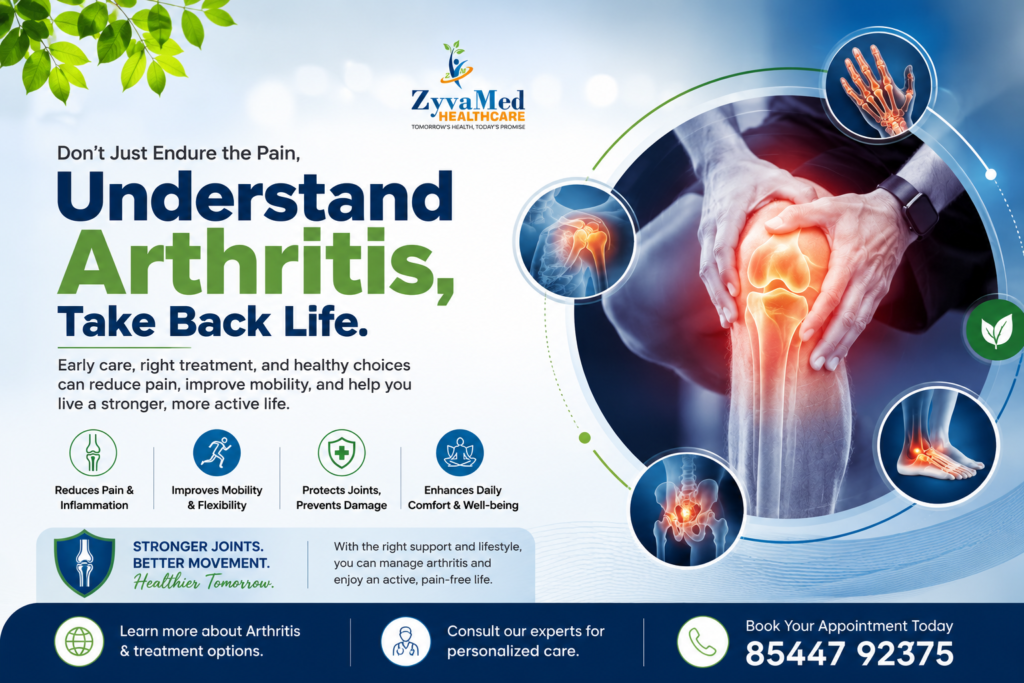
Arthritis is one of the most common health conditions affecting millions of people worldwide. It is often associated with aging, but arthritis can affect people of all ages, including children and young adults. The condition primarily impacts the joints, causing pain, stiffness, swelling, and reduced mobility.
Many people assume arthritis is a single disease, but it actually refers to more than 100 different types of joint-related conditions. If left untreated, arthritis can significantly affect daily activities and quality of life.
Understanding the causes, symptoms, types, diagnosis, treatment options, and lifestyle modifications can help individuals manage arthritis effectively and maintain an active lifestyle.
What Is Arthritis?
Arthritis is a condition characterized by inflammation of one or more joints. Joints are the areas where two bones meet, allowing movement and flexibility.
When arthritis develops, the cartilage that cushions the joints may wear down, or the immune system may mistakenly attack healthy joint tissues. This leads to pain, stiffness, swelling, and difficulty moving the affected joint.
The condition can affect various parts of the body, including:
- Knees
- Hips
- Hands
- Fingers
- Feet
- Ankles
- Shoulders
- Spine
Types of Arthritis
There are over 100 types of arthritis, but the most common include:
1. Osteoarthritis (OA)
Osteoarthritis is the most common form of arthritis and is often called “wear-and-tear arthritis.”
It occurs when the protective cartilage covering the ends of bones gradually breaks down.
Common Symptoms
- Joint pain
- Stiffness after inactivity
- Reduced flexibility
- Cracking or popping sounds in joints
- Bone spurs
Commonly Affected Areas
- Knees
- Hips
- Hands
- Spine
2. Rheumatoid Arthritis (RA)
Rheumatoid arthritis is an autoimmune disease where the immune system mistakenly attacks healthy joint tissues.
Unlike osteoarthritis, RA affects both sides of the body and may also impact organs such as the heart, lungs, and eyes.
Symptoms
- Joint pain and swelling
- Morning stiffness lasting over an hour
- Fatigue
- Fever
- Weight loss
3. Gout
Gout is a form of inflammatory arthritis caused by excessive uric acid levels in the body.
When uric acid crystals accumulate in joints, severe pain and inflammation occur.
Common Symptoms
- Sudden intense joint pain
- Redness and swelling
- Warmth around affected joints
The big toe is most commonly affected.
4. Psoriatic Arthritis
Psoriatic arthritis affects some individuals with psoriasis, a skin condition characterized by red, scaly patches.
Symptoms
- Joint stiffness
- Swollen fingers and toes
- Fatigue
- Skin lesions
Early Signs and Symptoms of Arthritis
Recognizing arthritis early can help prevent long-term joint damage.
Common Arthritis Symptoms
- Persistent joint pain
- Swelling around joints
- Stiffness, especially in the morning
- Reduced range of motion
- Tenderness
- Joint redness
- Fatigue
- Weakness
- Difficulty walking
- Reduced grip strength
Causes of Arthritis
The causes of arthritis vary depending on the type.
Age
The risk of arthritis increases with age due to natural joint wear and tear.
Genetics
Family history may increase susceptibility to certain forms of arthritis.
Obesity
Excess body weight places additional stress on weight-bearing joints such as knees and hips.
Autoimmune Disorders
Conditions like rheumatoid arthritis occur when the immune system attacks healthy tissues.
Previous Joint Injuries
Sports injuries and accidents may increase arthritis risk later in life.
Infections
Some bacterial and viral infections can trigger joint inflammation.
High Uric Acid Levels
Elevated uric acid levels can lead to gout.
Risk Factors for Arthritis
You may be at higher risk if you:
- Are over 40 years old
- Are overweight or obese
- Have a family history of arthritis
- Have previous joint injuries
- Lead a sedentary lifestyle
- Have autoimmune diseases
- Smoke regularly
How Is Arthritis Diagnosed?
Proper diagnosis helps determine the type and severity of arthritis.
Physical Examination
Doctors assess:
- Joint swelling
- Tenderness
- Mobility limitations
Blood Tests
Useful for diagnosing inflammatory arthritis and rheumatoid arthritis.
Common tests include:
- Rheumatoid Factor (RF)
- Anti-CCP Antibody Test
- ESR
- CRP
Imaging Tests
- X-rays
- MRI scans
- Ultrasound
These tests help evaluate joint damage and inflammation.
Best Treatment Options for Arthritis
Although arthritis may not always be curable, effective treatments can reduce symptoms and improve quality of life.
Medications
Doctors may recommend:
- Pain relievers
- Anti-inflammatory medications
- Disease-modifying drugs (for RA)
- Corticosteroids
Physical Therapy
Physical therapy helps:
- Improve flexibility
- Strengthen muscles
- Enhance mobility
Weight Management
Maintaining a healthy weight reduces pressure on joints.
Even a small reduction in body weight can significantly decrease knee pain.
Surgery
In severe cases, surgery may be recommended.
Examples include:
- Joint replacement
- Joint fusion
- Joint repair
Best Foods for Arthritis
Diet plays a crucial role in reducing inflammation and supporting joint health.
Anti-Inflammatory Foods
Fatty Fish
- Salmon
- Sardines
- Mackerel
Rich in Omega-3 fatty acids.
Fruits
- Berries
- Oranges
- Cherries
Contain powerful antioxidants.
Green Leafy Vegetables
- Spinach
- Kale
- Broccoli
Help reduce inflammation.
Nuts and Seeds
- Almonds
- Walnuts
- Flaxseeds
Provide healthy fats and nutrients.
Olive Oil
Contains anti-inflammatory compounds beneficial for joint health.
Foods to Avoid
Some foods may worsen inflammation.
Limit:
- Sugary beverages
- Processed foods
- Excess salt
- Deep-fried foods
- Refined carbohydrates
- Excessive alcohol
Best Exercises for Arthritis
Regular physical activity helps maintain joint flexibility.
Walking
A simple low-impact exercise that improves circulation and joint mobility.
Swimming
Water supports body weight and reduces stress on joints.
Cycling
Strengthens muscles while protecting joints.
Yoga
Improves flexibility, balance, and stress management.
Stretching
Helps reduce stiffness and maintain range of motion.
Lifestyle Tips for Arthritis Management
Stay Active
Movement prevents joints from becoming stiff.
Maintain Healthy Weight
Less body weight means less pressure on joints.
Get Adequate Sleep
Proper rest supports tissue repair and reduces inflammation.
Manage Stress
Stress can worsen pain perception and inflammation.
Follow Medical Advice
Regular check-ups ensure proper disease management.
Can Arthritis Be Prevented?
While some forms of arthritis cannot be completely prevented, the risk can be reduced by:
- Maintaining a healthy weight
- Exercising regularly
- Avoiding smoking
- Protecting joints from injury
- Eating a balanced diet
- Staying hydrated
Conclusion
Arthritis is a common yet manageable condition that affects people of all ages. Early diagnosis, proper treatment, regular exercise, healthy eating habits, and lifestyle modifications can significantly improve quality of life and reduce joint pain.
If you experience persistent joint pain, stiffness, or swelling, consult a healthcare professional for proper evaluation and treatment. Early intervention can help prevent complications and preserve joint function for years to come.
Frequently Asked Questions (FAQs)
1. What is the main cause of arthritis?
The cause depends on the type of arthritis and may include aging, autoimmune disorders, genetics, obesity, or joint injuries.
2. What are the early signs of arthritis?
Joint pain, stiffness, swelling, tenderness, and reduced flexibility are common early symptoms.
3. Can arthritis be cured?
Most forms of arthritis cannot be completely cured, but symptoms can be effectively managed.
4. Which arthritis is most common?
Osteoarthritis is the most common form of arthritis worldwide.
5. Is arthritis only seen in older adults?
No. Arthritis can affect people of all ages, including children and young adults.
6. Which foods help reduce arthritis pain?
Fatty fish, berries, leafy greens, nuts, seeds, and olive oil may help reduce inflammation.
7. Is walking good for arthritis?
Yes. Walking is a low-impact exercise that helps maintain joint mobility and reduce stiffness.
8. Can obesity worsen arthritis?
Yes. Excess body weight increases pressure on joints and may worsen symptoms.
9. What is the difference between osteoarthritis and rheumatoid arthritis?
Osteoarthritis results from cartilage wear and tear, while rheumatoid arthritis is an autoimmune condition.
10. How can arthritis pain be managed naturally?
Regular exercise, weight management, healthy eating, stress reduction, and physical therapy can help manage symptoms naturally.