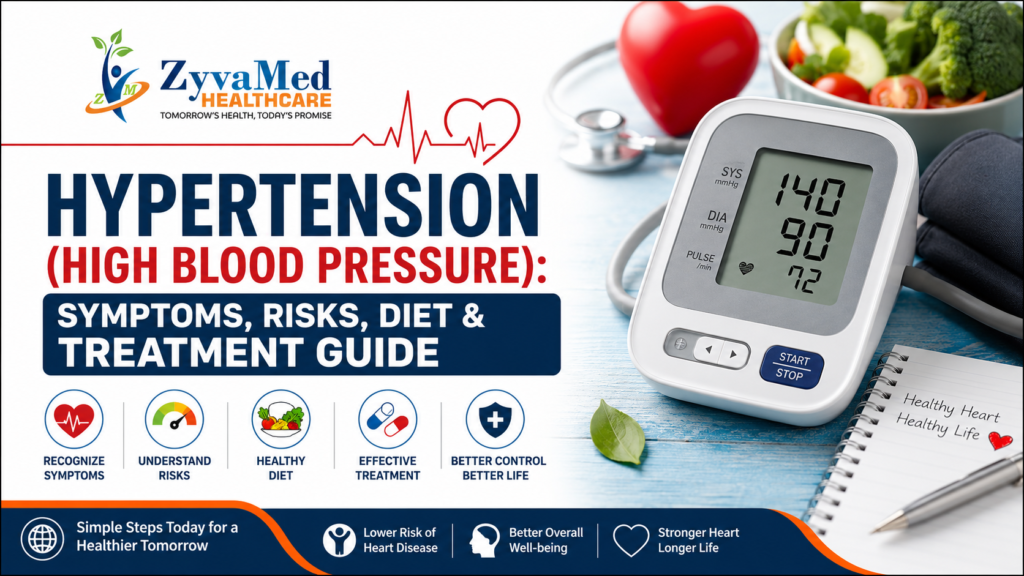
Hypertension, commonly known as high blood pressure, is one of the most widespread health conditions worldwide. Often referred to as the “silent killer,” hypertension usually develops without noticeable symptoms but can significantly increase the risk of heart disease, stroke, kidney failure, and other serious health complications.
Blood pressure is the force exerted by circulating blood against the walls of the arteries. When this pressure remains consistently higher than normal, it is classified as hypertension. Because many individuals do not experience obvious symptoms, regular blood pressure monitoring is essential for early detection and effective management.
What Is Blood Pressure?
Blood pressure is measured using two numbers:
- Systolic Pressure: The upper number, representing pressure when the heart beats.
- Diastolic Pressure: The lower number, representing pressure when the heart rests between beats.
Blood Pressure Categories
- Normal: Less than 120/80 mmHg
- Elevated: 120-129 / Less than 80 mmHg
- Stage 1 Hypertension: 130-139 / 80-89 mmHg
- Stage 2 Hypertension: 140/90 mmHg or higher
Maintaining blood pressure within the normal range is crucial for protecting your heart and overall health.
What Causes Hypertension?
In many cases, the exact cause of hypertension is unknown. This is called primary or essential hypertension. However, several factors contribute to the development of high blood pressure.
Common Causes and Risk Factors
- Family history of hypertension
- Obesity and overweight
- Lack of physical activity
- Excessive salt intake
- High cholesterol levels
- Smoking and tobacco use
- Excessive alcohol consumption
- Chronic stress
- Diabetes
- Kidney disorders
- Increasing age
Certain medications and underlying medical conditions may also contribute to secondary hypertension.
Symptoms of Hypertension
One of the biggest challenges with hypertension is that it often has no noticeable symptoms. Many people live with high blood pressure for years without realizing it.
However, severely elevated blood pressure may cause:
- Frequent headaches
- Dizziness
- Shortness of breath
- Chest pain
- Fatigue
- Blurred vision
- Nosebleeds
- Irregular heartbeat
Because symptoms may not appear until complications develop, routine health check-ups are extremely important.
Why Is Hypertension Dangerous?
When left untreated, high blood pressure places extra strain on blood vessels and vital organs. Over time, this damage can lead to life-threatening complications.
Potential Complications Include
Heart Disease
Hypertension is one of the leading causes of heart attacks, heart failure, and coronary artery disease.
Stroke
High blood pressure can damage arteries supplying blood to the brain, increasing the risk of stroke.
Kidney Damage
The kidneys rely on healthy blood vessels to function properly. Persistent hypertension can impair kidney function and lead to chronic kidney disease.
Vision Problems
High blood pressure can damage blood vessels in the eyes, potentially causing vision impairment.
Cognitive Decline
Studies suggest that uncontrolled hypertension may increase the risk of memory problems and cognitive decline later in life.
How Is Hypertension Diagnosed?
Hypertension is diagnosed through regular blood pressure measurements.
Your healthcare provider may recommend:
- Blood pressure monitoring
- Blood tests
- Kidney function tests
- Cholesterol screening
- Electrocardiogram (ECG)
- Echocardiogram if necessary
Multiple readings over time are often required to confirm a diagnosis.
Hypertension Treatment Options
The goal of treatment is to lower blood pressure and reduce the risk of complications.
Lifestyle Modifications
Lifestyle changes are often the first line of treatment and can significantly improve blood pressure control.
Healthy Diet
Focus on:
- Fruits and vegetables
- Whole grains
- Lean proteins
- Low-fat dairy products
- Foods rich in potassium
Reduce:
- Salt intake
- Processed foods
- Sugary beverages
- Saturated fats
Regular Exercise
At least 150 minutes of moderate physical activity per week can help lower blood pressure and improve cardiovascular health.
Weight Management
Even modest weight loss can significantly reduce blood pressure in overweight individuals.
Stress Management
Practices such as meditation, yoga, deep breathing exercises, and adequate sleep can help control stress-related blood pressure spikes.
Medication
In some cases, doctors may prescribe medications such as:
- ACE inhibitors
- ARBs
- Beta-blockers
- Calcium channel blockers
- Diuretics
Medication should always be taken according to medical advice.
Best Diet for High Blood Pressure
Following a heart-healthy eating plan is one of the most effective ways to manage hypertension.
Foods That Help Lower Blood Pressure
✔ Bananas
✔ Leafy green vegetables
✔ Oats
✔ Fatty fish
✔ Berries
✔ Nuts and seeds
✔ Garlic
✔ Beans and legumes
Foods to Limit
✘ Excess salt
✘ Fried foods
✘ Processed snacks
✘ Sugary drinks
✘ Excess alcohol
Making smart dietary choices can greatly improve long-term blood pressure control.
How to Prevent Hypertension
Prevention is always better than treatment. Healthy lifestyle habits can significantly reduce the risk of developing high blood pressure.
Prevention Tips
✔ Maintain a healthy body weight
✔ Exercise regularly
✔ Limit salt consumption
✔ Avoid smoking
✔ Reduce alcohol intake
✔ Manage stress effectively
✔ Monitor blood pressure regularly
✔ Get routine health screenings
Small daily habits can have a major impact on heart health over time.
Conclusion
Hypertension is a common yet potentially dangerous condition that often develops without obvious warning signs. Early detection, regular monitoring, healthy lifestyle choices, and proper medical care are essential for preventing serious complications such as heart disease, stroke, and kidney damage.
By understanding the causes, symptoms, risk factors, and treatment options for hypertension, individuals can take proactive steps toward maintaining healthy blood pressure and improving overall well-being.
At ZyvaMed Healthcare, we believe that awareness and prevention are the foundation of a healthier future. Monitor your blood pressure regularly, make heart-healthy choices, and prioritize your long-term health.