
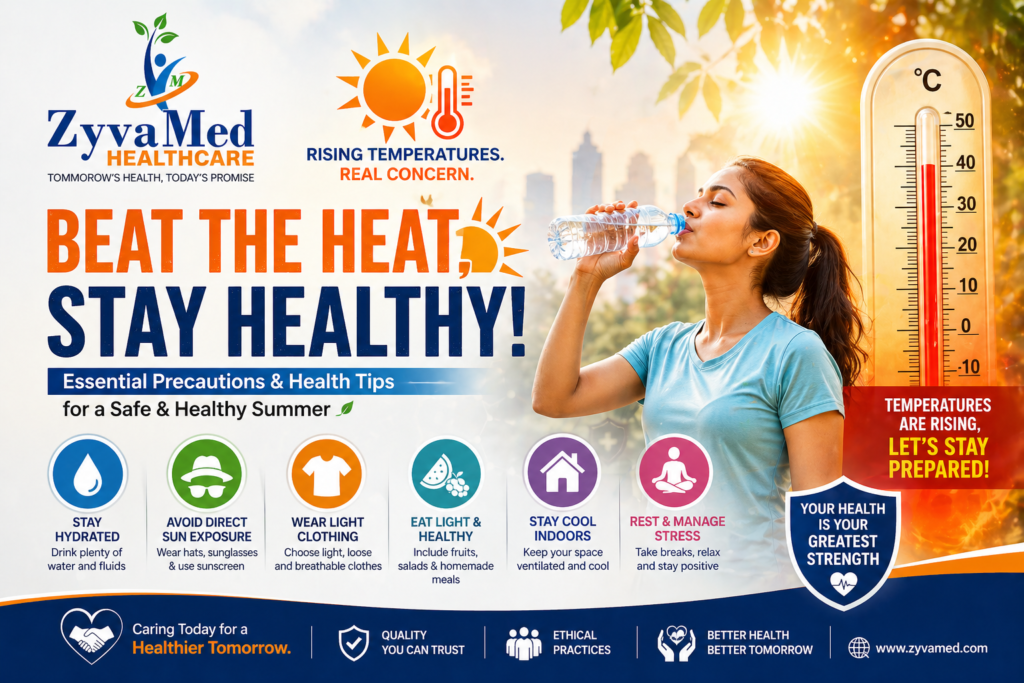
With temperatures across India rising rapidly each year, heat-related health issues are becoming increasingly common. From dehydration and fatigue to heatstroke, extreme weather conditions can significantly impact overall health if proper precautions are not taken.
At ZyvaMed Healthcare Pvt. Ltd., we believe that awareness and prevention are the first steps toward a healthier life. This guide will help you understand the risks of rising temperatures and provide practical health tips to stay safe during the summer season.
Why Rising Temperatures Are a Serious Health Concern
India’s climate is becoming hotter, with many regions experiencing extreme heat waves. Prolonged exposure to high temperatures can lead to:
- Dehydration
- Heat exhaustion
- Heatstroke
- Skin problems
- Reduced energy levels
These conditions can affect people of all ages, especially children, elderly individuals, and working professionals who spend long hours outdoors.
Top Health Risks During Extreme Heat
1. Dehydration
When your body loses more fluids than it takes in, it leads to dehydration. Symptoms include dizziness, dry mouth, and weakness.
2. Heatstroke
A severe condition where the body fails to regulate temperature, potentially becoming life-threatening if not treated immediately.
3. Fatigue and Low Productivity
High temperatures can drain your energy, affecting both physical performance and mental focus.
4. Skin Damage
Excessive sun exposure can cause sunburn, rashes, and long-term skin issues.
Best Precautions to Stay Safe in Summer
☀️ Stay Hydrated at All Times
Drink plenty of water throughout the day, even if you don’t feel thirsty. Include fluids like coconut water, lemon water, and ORS to maintain electrolyte balance.
🧢 Avoid Direct Sun Exposure
Try to stay indoors during peak heat hours (12 PM to 4 PM). If you must go outside, wear caps, sunglasses, and protective clothing.
👕 Wear Light & Breathable Clothing
Choose cotton or loose-fitting clothes that allow your body to stay cool and comfortable.
🍉 Eat Light and Healthy Meals
Include fruits like watermelon, cucumber, and oranges in your diet. Avoid heavy, oily, and spicy foods that can increase body heat.
🏢 Take Frequent Breaks (For Working Professionals)
If you work long hours, especially outdoors or in offices without proper ventilation, take short breaks to rest and hydrate.
Smart Health Tips for Daily Lifestyle
- Start your day with a glass of water to keep your body hydrated
- Carry a water bottle wherever you go
- Use sunscreen to protect your skin from harmful UV rays
- Keep your living and working space well-ventilated
- Avoid caffeine and alcohol as they can increase dehydration
Special Advice for Working Professionals & Field Staff
For individuals working in the field, such as Medical Representatives and sales professionals, exposure to heat is unavoidable. Here are some extra precautions:
- Plan your visits during cooler hours (morning/evening)
- Always carry water and energy drinks
- Take short “cool-down breaks” between visits
- Avoid skipping meals to maintain energy levels
Taking small steps can make a big difference in maintaining your health and productivity.
When to Seek Medical Attention
Immediate medical help is necessary if you experience:
- High body temperature
- Confusion or dizziness
- Rapid heartbeat
- Nausea or vomiting
Ignoring these symptoms can lead to serious complications.
ZyvaMed Healthcare’s Commitment to Your Well-being
At ZyvaMed Healthcare Pvt. Ltd., we are committed to promoting not just medicines but overall well-being. Through awareness, education, and quality healthcare solutions, we aim to support healthier lifestyles across communities.
Our focus remains on delivering trusted healthcare solutions while empowering people with the knowledge they need to stay safe in changing environmental conditions.
Conclusion
Rising temperatures are a growing concern, but with the right precautions and awareness, you can protect yourself and your loved ones. Staying hydrated, eating right, and avoiding excessive heat exposure are simple yet effective ways to stay healthy during the summer.
Remember, your health is your responsibility—and prevention is always better than cure.